When Paris Saint-Germain scored their fifth goal against Bayern Munich in a recent high-voltage clash, celebrations erupted on the touchline. But the elation was short-lived—met with a sharp rebuke from Bayern’s director of football, Markus Hoenig. What could have been a triumphant moment for PSG quickly spiraled into a controversy over respect, rivalry, and the unwritten rules of elite football.
Hoenig didn’t hold back, calling the post-goal celebrations “unnecessary” and “disrespectful,” particularly given the stature of both clubs and the context of the match. His comments have sparked widespread debate: Is there a limit to celebration in professional football? And where should pride end and decorum begin?
This isn’t just about one goal—it’s about the line between confidence and arrogance, dominance and disrespect.
The Incident That Reignited a Rivalry
The moment unfolded in the 82nd minute. PSG, already leading 4–0, broke forward with ruthless precision. Kylian Mbappé laid the ball off to Ousmane Dembélé, who slotted home coolly. The bench erupted. Players mobbed each other near Bayern’s goal. Coach Luis Enrique gestured emphatically—fist pumps, a wide grin.
To many fans, it was pure emotion. To Hoenig, it was a provocation.
“This wasn’t a friendly. This wasn’t youth football. This was a knockout match between two of Europe’s biggest clubs,” Hoenig said in a post-match interview. “There’s a moment to express joy, and there’s a moment to show respect. Celebrating excessively after the fifth goal—especially in this context—crosses that line.”
The irony? Bayern had done the same in past seasons—most notably in their 8–2 dismantling of Barcelona in 2020. Back then, PSG fans, not unreasonably, labeled it as “shameful.” Now, the roles were reversed.
Why Celebrating the Fifth Goal Crosses a Line
In football culture, unwritten codes often carry more weight than official rules. Scoring four goals is dominant. Five? That’s where the narrative shifts.
There’s a tacit agreement among top clubs: once a result is beyond doubt—usually around the fourth goal—excessive celebrations are frowned upon. Teams continue to play hard, but the tone becomes more controlled, more respectful.
PSG’s celebrations didn’t stop at the goal. Players danced, mimicked drinking from a cup, and pointed to the sky in theatrical fashion. For Bayern staff and fans, it felt less like joy and more like taunting.
Examples of where the line was crossed: - Players celebrating in front of Bayern’s bench - Repeated gesticulating toward the opposition fans - Substitutes running halfway across the pitch to join the commotion
Contrast this with Manchester City’s 4–0 win over Real Madrid in 2023. Erling Haaland scored a brace, but celebrations were muted—respectful handshakes, quick returns to position. Pep Guardiola even signaled for calm.
PSG’s approach, by comparison, came across as performative.
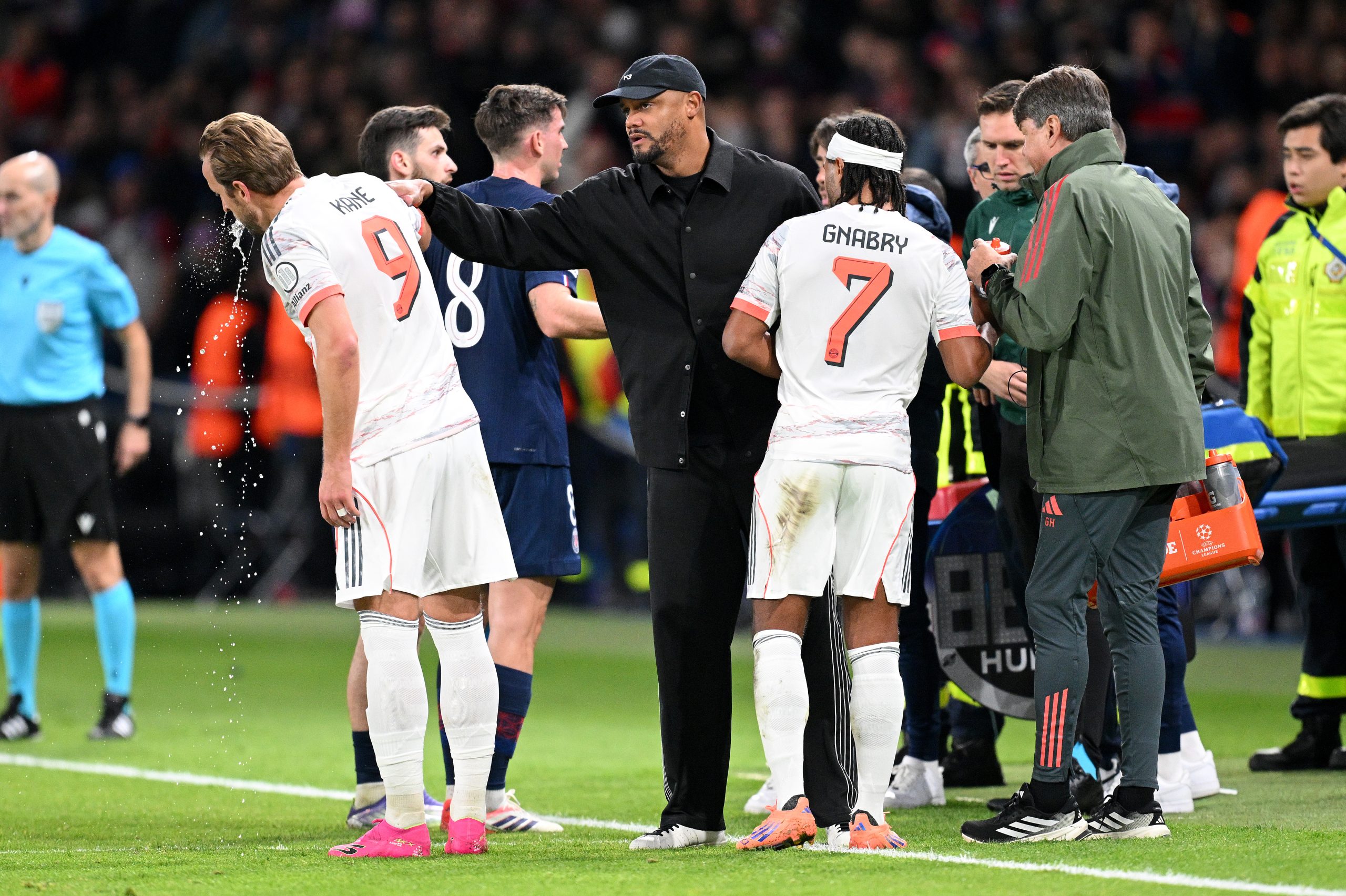
The Bayern Munich Perspective For Bayern, the criticism isn’t just about one match—it’s about identity. The German giants pride themselves on professionalism, dignity, and consistent excellence. Flashy celebrations aren’t part of their brand.
Hoenig’s comments reflect that ethos.
“We compete to win,” he said. “But we also compete with respect. When you’ve already won the battle, you don’t need to humiliate the opponent.”
Bayern’s culture emphasizes humility even in victory. That’s why their players rarely over-celebrate, even in dominant wins. It’s also why Hoenig’s criticism landed with weight—it wasn’t sour grapes. It was a statement of principle.
Still, critics argue Bayern are being hypocritical. In 2020, Thomas Müller danced near the Barcelona bench after scoring. Joshua Kimmich waved goodbye to the crowd. Yet no Bayern official condemned those actions at the time.
So is this selective outrage?
Not necessarily. Context matters. That Barcelona match was a quarter-final rearranged into a mini-tournament during the pandemic—an unusual format, high emotions. This PSG match, by contrast, was a standard Champions League group-stage fixture. The over-the-top celebrations felt out of place.
PSG’s Counterargument: Expressing Joy is Part of Football
Luis Enrique and PSG aren’t backing down. For them, football is entertainment. Emotion is authenticity.
“In football, when you score, you celebrate,” Enrique said. “We’re not robots. Our players are young, passionate. They’ve worked all week for this moment. Why should they suppress joy?”
He has a point. The modern game thrives on personality. Mbappé’s flair, Dembélé’s swagger—they’re part of PSG’s identity. Suppressing that, Enrique argues, would sanitize the sport.
Moreover, PSG have long been on the receiving end of criticism for being flashy, arrogant, or “new money.” Every celebration, every gesture, is scrutinized more harshly than at other clubs.
But here’s the nuance: Expressing joy ≠ showing up the opponent. Celebrating a goal ≠ taunting a rival.
There’s a difference between jumping with teammates and staging a choreographed mockery in front of the opposition dugout.
PSG didn’t cross a rulebook line. But they did cross a cultural one.
Historical Precedents: When Celebrations Backfired
This isn’t the first time celebrations have sparked controversy.
1. Arsenal vs. Manchester United (2003) After scoring in a 6–1 win, Ruud van Nistelrooy celebrated in front of Arsenal fans. The backlash was immediate. He was later booed for months at away games.
2. Real Madrid vs. Barcelona (2014) After a 4–0 win, Cristiano Ronaldo made a “zip your mouth” gesture toward Barca fans. He was fined by UEFA.
3. Liverpool vs. Manchester United (2023) Darwin Núñez celebrated his goal with a theatrical neck-slitting motion. He was booked and later apologized.
Each case shows the risks of over-celebrating: fueling rivalries, inviting sanctions, and damaging public perception.
PSG’s fifth goal may not draw a fine—but it’s costing them goodwill.
The Bigger Picture: Sportsmanship in Modern Football
Football is evolving. The culture of celebration has shifted, especially with younger players influenced by social media, fashion, and global stardom.

But elite clubs still operate within a framework of mutual respect. The best rivalries—Real Madrid vs. Barcelona, Bayern vs. Dortmund—are fierce but dignified.
When PSG celebrates a fifth goal like it’s a derby decider, it disrupts that balance. It turns competition into spectacle—and not always in a good way.
What clubs can do to maintain standards: - Coaches should emphasize restraint in lopsided matches - Captains should lead by example in managing emotions - Celebrations should stay within the penalty area, not target benches or fans
Hoenig isn’t calling for rule changes. He’s reminding everyone that status comes with responsibility.
Why This Matters Beyond One Match
This incident isn’t just about PSG and Bayern. It’s about the tone of European football.
As financial power shifts toward clubs backed by states or billionaires, the fear is that cultural norms—respect, humility, tradition—will erode.
Bayern represent an old-school ideal: excellence without excess. PSG symbolize the new era: dominance with drama.
Hoenig’s snide remarks weren’t just a reaction. They were a defense of a philosophy.
And in that tension lies the future of football.
Will the game become a stage for personal branding and viral moments? Or will clubs still honor the sport’s unwritten codes?
There’s room for both. But crossing lines—especially after a fifth goal—tells fans and rivals where a team’s priorities lie.
The Verdict: Respect Wins in the End
PSG scored five goals. They won the match. Objectively, they outplayed Bayern.
But Hoenig’s critique wasn’t about the scoreline. It was about conduct.
You can dominate without humiliating. You can win without rubbing it in.
In top-tier football, legacy is built not just on trophies, but on how you earned them.
Bayern may have lost the match. But in the court of public opinion, their stance on dignity may earn them long-term respect.
For PSG, the question remains: Was the celebration worth the backlash?
Next time, maybe a simple fist pump will do.
Frequently Asked Questions
Why did Bayern Munich’s director criticize PSG’s fifth goal celebration? Because it was seen as excessive and disrespectful, especially given the lopsided score and the stature of both clubs.
Did PSG do anything wrong according to the rules? No—there was no rule violation. But the celebration broke unwritten codes of sportsmanship in elite football.
Has Bayern ever celebrated like this? Yes—after their 8–2 win over Barcelona in 2020. But the context (a pandemic-era mini-tournament) was different.
What did Markus Hoenig specifically say? He called the celebrations “unnecessary” and “disrespectful,” emphasizing the need for decorum in high-level matches.
How did PSG respond? Coach Luis Enrique defended the players, saying they were expressing natural joy and passion.
Is there a double standard in how celebrations are judged? Possibly. Clubs like PSG often face harsher criticism due to perceptions of arrogance or new wealth.
What’s the broader issue here? It’s about balancing emotion and respect in modern football—especially when dominance meets showmanship.
FAQ
What should you look for in Bayern Munich Director Criticizes PSG’s Fifth Goal Celebration? Focus on relevance, practical value, and how well the solution matches real user intent.
Is Bayern Munich Director Criticizes PSG’s Fifth Goal Celebration suitable for beginners? That depends on the workflow, but a clear step-by-step approach usually makes it easier to start.
How do you compare options around Bayern Munich Director Criticizes PSG’s Fifth Goal Celebration? Compare features, trust signals, limitations, pricing, and ease of implementation.
What mistakes should you avoid? Avoid generic choices, weak validation, and decisions based only on marketing claims.
What is the next best step? Shortlist the most relevant options, validate them quickly, and refine from real-world results.