Safety doesn’t improve through policy alone—it’s shaped in the moments when teams pause, reflect, and connect. Too many monthly toolbox talks fall into the same trap: predictable, compliance-driven monologues that employees endure rather than engage with. The result? Missed opportunities, fading attention, and preventable incidents.
The fix isn’t complexity—it’s relevance. When monthly toolbox talk topics align with real job site challenges, seasonal risks, and evolving team dynamics, they shift from routine to results. This guide delivers actionable, high-impact topics—complete with talking points, delivery tips, and real-world integration strategies.
Why Most Monthly Toolbox Talks Fail
Too many safety meetings are treated as checkboxes, not change agents. Leaders show up with a generic handout, read through bullet points, ask “Any questions?” (met with silence), and move on. These sessions fail because they lack context, interaction, and practical follow-up.
Common breakdowns include: - Irrelevant content – Discussing crane safety on a site with no cranes. - One-way delivery – No space for worker input or experience sharing. - No follow-through – Hazards are noted but never verified as corrected. - Poor timing – Scheduled when crews are rushing to start or end shifts.
The best monthly talks aren’t lectures. They’re conversations rooted in what’s happening this month—weather shifts, new equipment, staffing changes, or recent near-misses.
How to Structure a High-Impact Monthly Toolbox Talk
A strong format keeps focus, encourages participation, and ensures accountability. Use this proven workflow:
#### 1. Start with a Real Incident or Observation Open with a brief story: “Last week, a worker tripped over an unmarked cord near the generator—no injury, but could’ve been worse.” This grounds the topic in reality.
#### 2. Pose a Question, Not a Statement Instead of “Today we’re talking about electrical safety,” try: “What’s the biggest electrical hazard we’ve seen in the last 30 days?” This activates thinking.
#### 3. Engage the Team with a Mini-Discussion Break into pairs or small groups for 2–3 minutes to discuss specific risks or improvements. Then share insights.
#### 4. Reinforce with a Quick Demonstration (When Possible) Show proper PPE donning, lockout/tagout steps, or how to inspect a ladder. Visuals stick.
#### 5. End with a Clear Action Assign one observable follow-up: “By Thursday, each crew lead will check grounding on all portable tools.”
Document attendance, key points, and actions—then post visibly or share via site comms.
12 Monthly Toolbox Talk Topics (With Use Cases)
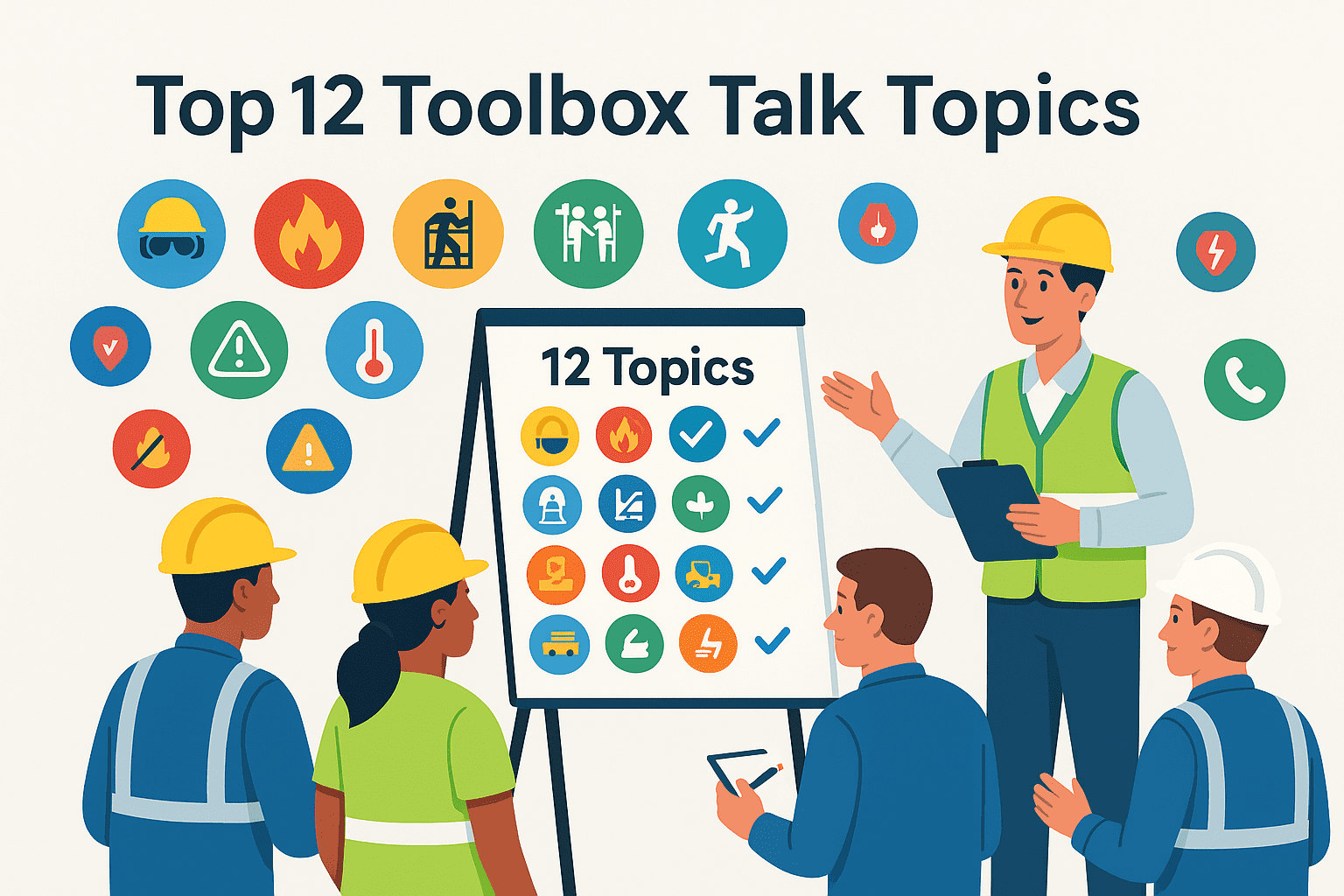
Rotate topics to align with operational cycles, weather, and project phases. These 12 are proven across construction, maintenance, and field services.
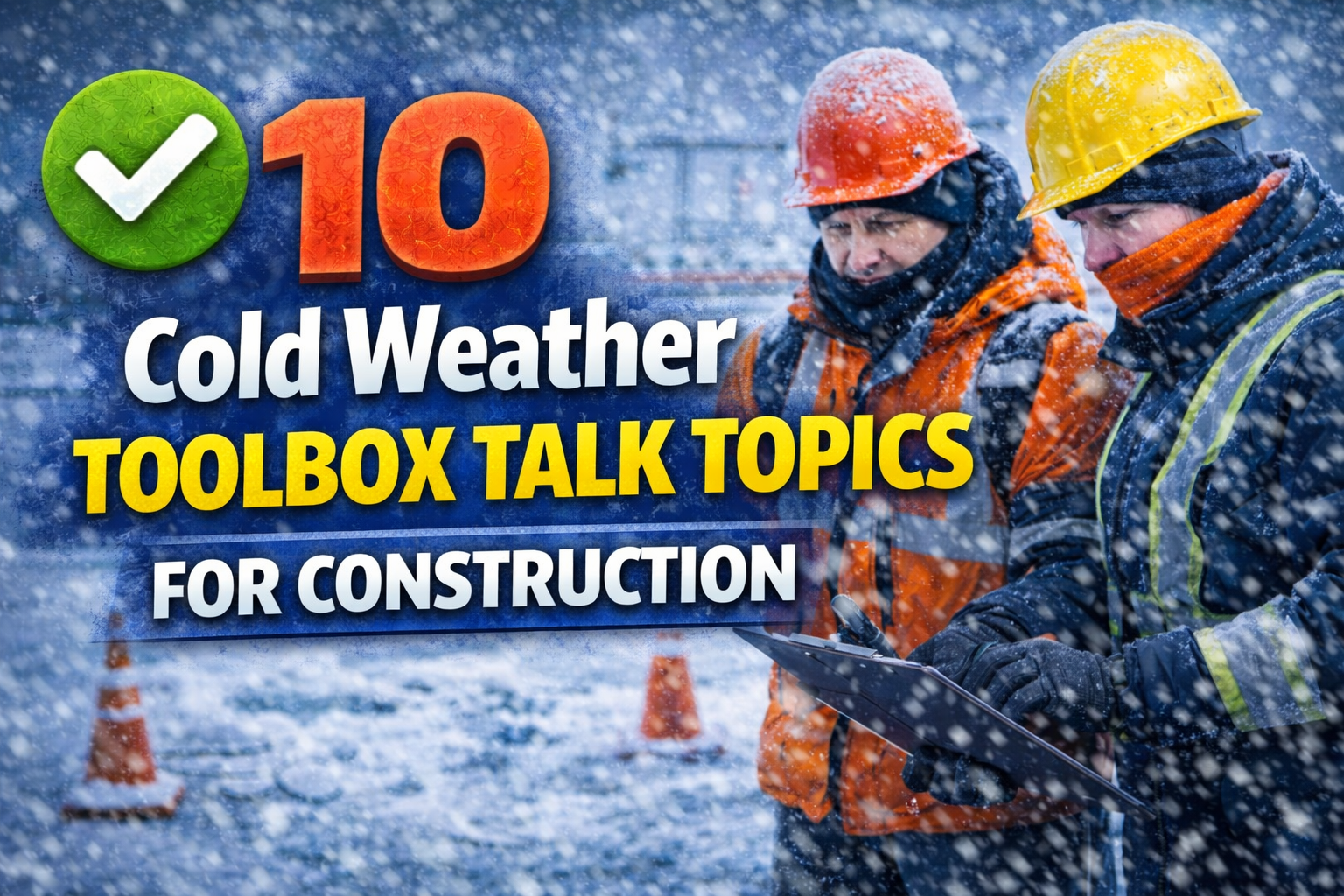
#### January: Cold Stress & Winter Preparedness Why it matters: Hypothermia and frostbite risks rise—but workers often underestimate mild cold exposure. Use case: A utility crew in the Midwest held a talk after two workers reported numb fingers during an outdoor meter replacement. They reviewed layering techniques, buddy checks, and warm-up schedules. Talking points: - Recognizing early signs of cold stress - Proper use of insulated gloves and heated gear - Scheduling frequent breaks in warm zones
#### February: Housekeeping & Clutter Control Why it matters: 25% of slip, trip, and fall incidents start with poor site organization. Use case: A warehouse renovation team mapped “clutter hotspots” and assigned daily cleanup roles by zone. Talking points: - Daily 5-minute sweep rule (clean as you go) - Marking waste and storage zones - Shared accountability—everyone owns the space
#### March: Ladder Safety During Spring Setup Why it matters: Increased maintenance and repair work means more ladder use—often improperly. Common mistake: Using extension ladders on unstable ground or overreaching. Talking points: - The 4:1 rule (1 foot out for every 4 feet up) - Inspecting rungs and locks before use - Alternatives: When to use scaffolds or lifts instead
#### April: Working Around Excavations & Trenches Why it matters: Soil collapse is a leading cause of fatalities in utility and foundation work. Use case: After noticing improper shoring on a gas line trench, a superintendent led a hands-on shoring inspection drill. Talking points: - Recognizing trench depth thresholds requiring protection - Daily inspection requirements - Emergency response if collapse occurs
#### May: Heat Stress Begins Early Why it matters: Heat illness can start in temperatures as low as 70°F with high humidity or heavy PPE. Talking points: - Hydration benchmarks (e.g., one liter per hour in heat) - Acclimatization schedules for new hires - Spotting dizziness, nausea, or confusion in teammates
#### June: PPE Audit & Fit Check Why it matters: Gear that doesn’t fit or isn’t worn correctly offers false protection. Use case: A roofing crew discovered half the team had damaged harness D-rings during a peer inspection. Talking points: - Conducting a 30-second PPE self-check - Proper fit of respirators, gloves, and eye protection - Reporting damaged or expired equipment
#### July: Fire Prevention in High Heat Why it matters: Fuel storage, welding, and electrical loads increase fire risks in summer. Talking points: - Clearing flammable debris around work areas - Proper extinguisher types (ABC vs. CO2) - Hot work permits and fire watch procedures
#### August: Ergonomics in Repetitive Tasks Why it matters: Repetitive strain injuries often develop silently over weeks. Use case: A pipefitting team introduced rotating roles to reduce shoulder strain during long installs. Talking points: - Recognizing early pain or stiffness - Proper lifting and twisting mechanics - Using mechanical aids when possible
#### September: Night Work Safety Why it matters: Visibility drops, fatigue rises, and communication gaps widen after dark. Talking points: - High-visibility clothing and lighting checks - Clear hand signals and radio protocols - Managing shift fatigue with scheduled breaks
#### October: Fall Protection Inspection Month Why it matters: With seasonal work at heights (rooftop repairs, signage), harnesses and anchors need verification. Talking points: - Webbing fraying, snap corrosion, shock absorber integrity - Anchor point load ratings - Rescue plan review—how would you retrieve a suspended worker?
#### November: Safe Use of Temporary Power Why it matters: Holiday events, seasonal setups, and remote sites rely on generators and extension cords—often misused. Talking points: - GFCI protection on all outdoor circuits - Avoiding daisy-chaining power strips - Generator placement (CO risk)
#### December: Fatigue & Holiday Rush Awareness Why it matters: Increased schedules, personal stress, and winter weather compound fatigue risks. Talking points: - Recognizing micro-sleeps or slowed reaction times - Encouraging honest reporting of fatigue - Adjusting workloads during high-pressure periods
Integrating Toolbox Talks Into Daily Workflow
The best talks don’t live in isolation. Fold them into your operational rhythm:
- Schedule early in the month—not as an afterthought.
- Link to project milestones—e.g., ladder safety before vertical work begins.
- Use visual aids—posters, photos of unsafe conditions (anonymized), or short videos.
- Rotate facilitators—empower crew leads or experienced workers to lead occasionally.
- Track trends—aggregate discussion points monthly to spot recurring risks.
One electrical contractor reduced recordables by 40% in six months simply by tagging each monthly topic to a project phase (e.g., “Lockout/Tagout” before commissioning).
Pitfalls to Avoid in Monthly Safety Talks
Even well-intentioned talks go off track. Steer clear of these:
- Overloading content – Stick to one or two key messages.
- Ignoring site conditions – Talk about what’s actually present, not theoretical risks.
- Skipping documentation – No record means no accountability or audit trail.
- Forgetting positive reinforcement – Highlight safe behaviors spotted this month.
- Using jargon – Say “pinch point” only after showing an example.
One superintendent improved engagement by starting each talk with: “What’s one safe thing you saw a teammate do this week?” It shifted the tone from corrective to collaborative.
Make It Stick: Follow-Up That Matters
A talk without follow-up is noise. Build in verification:
- Assign one observable action per session – e.g., “Inspect all hard hats for cracks by Friday.”
- Do spot checks – Walk the site mid-week and acknowledge compliance.
- Close the loop next month – Start the next talk with: “Last month we talked about heat stress. What changes have you noticed?”
One road construction crew used a “Safety Action Board” where workers posted photos of corrected hazards. It became a point of pride.
Monthly toolbox talks shouldn’t be about checking a box. They’re a platform to build a culture where safety is spoken, seen, and sustained. Choose topics that reflect real work, deliver them with clarity and connection, and tie them to actions that matter. When done right, these 15-minute conversations don’t just inform—they transform behavior.
Start next month with a topic that hits close to home. Ask real questions. Listen more than you speak. And watch safety shift from policy to practice.
FAQ
What are good monthly toolbox talk topics? Topics like cold stress, ladder safety, heat illness, PPE checks, and excavation safety work well because they align with seasonal and operational risks.
How long should a monthly toolbox talk last? Aim for 10–15 minutes. Focus on one or two key points with time for team discussion and a clear takeaway.
Who should lead a toolbox talk? Supervisors typically lead, but rotating experienced crew members builds ownership and engagement.
Do toolbox talks need to be documented? Yes. Record attendance, topic, key points, and any actions taken for compliance and tracking.
Can toolbox talks reduce workplace incidents? Yes—when they’re relevant, interactive, and tied to follow-up, they reinforce safe behaviors and catch hazards early.
Should toolbox talks be the same every month? No. Rotate topics based on season, project phase, incident trends, and crew feedback.
How do you keep workers engaged during safety talks? Start with a real story, ask open questions, include quick demonstrations, and assign simple follow-up actions.
FAQ
What should you look for in Monthly Toolbox Talk Topics That Actually Engage Teams? Focus on relevance, practical value, and how well the solution matches real user intent.
Is Monthly Toolbox Talk Topics That Actually Engage Teams suitable for beginners? That depends on the workflow, but a clear step-by-step approach usually makes it easier to start.
How do you compare options around Monthly Toolbox Talk Topics That Actually Engage Teams? Compare features, trust signals, limitations, pricing, and ease of implementation.
What mistakes should you avoid? Avoid generic choices, weak validation, and decisions based only on marketing claims.
What is the next best step? Shortlist the most relevant options, validate them quickly, and refine from real-world results.