The television world has lost one of its most enduring and quietly revolutionary figures. A beloved Australian actress, best known for her standout role in the groundbreaking Channel Ten series Number 96, has passed away at the remarkable age of 105. Her death marks not just the end of a life well-lived but the quiet closing of a chapter in Australian television history—one defined by bold storytelling, cultural shifts, and fearless performances.
Though her name may not dominate international headlines today, within Australia and among global fans of classic television, her presence in Number 96 left an indelible mark. The show, which aired from 1972 to 1977, was a seismic force in Australian pop culture, known for pushing boundaries in sexuality, social issues, and narrative daring. And at the heart of its unforgettable ensemble cast was an actress whose warmth, timing, and emotional depth helped ground its more sensational storylines.
The Woman Behind the Role: A Career Forged in Innovation
Born in the early 20th century, long before television became a household staple, she began her career in theatre and radio—mediums that demanded vocal precision and emotional authenticity. When she joined Number 96 in its formative years, she brought that stage-trained discipline to a medium still finding its voice in Australia.
Her character—often portrayed as the neighborhood matriarch or sharp-tongued confidante—became a fan favorite not because of dramatic arcs or scandalous plots, but because of her relatability. At a time when many characters leaned into caricature to match the show’s campy tone, she delivered nuance. Whether consoling a younger character through a crisis or delivering a withering one-liner, she balanced comedy and pathos with rare ease.
One memorable storyline saw her character confront ageism in the workplace—a theme almost unheard of on television in the early 1970s. Her performance in that arc was quietly revolutionary: understated, dignified, and deeply human. It resonated with older viewers who rarely saw their struggles reflected on screen, and it earned her a Logie nomination, one of several accolades throughout her career.
Number 96: A Cultural Landmark That Broke the Mold
To understand the significance of her role, one must first understand Number 96 itself. More than just a soap opera, it was a cultural disruptor. Set in a Sydney apartment block, the series wove together the lives of a diverse cast—lesbian couples, war veterans, immigrants, and single mothers—at a time when such representation was all but absent from mainstream media.
The show was infamous for its sensational plots: alien abductions, bombs in apartments, and yes, full-frontal nudity. But beneath the shock value was a profound commitment to social commentary. It tackled topics like abortion, domestic violence, homosexuality, and drug use with a frankness that made it both controversial and vital.
She was part of this revolution not as a provocateur, but as an anchor. While others screamed or schemed, she offered stillness. Her presence provided emotional continuity in a series that often teetered on the edge of absurdity. That balance—between chaos and calm—was essential to the show’s longevity and its ability to be taken seriously, despite its reputation.
At its peak, Number 96 attracted over three million viewers across Australia—nearly 40% of the population at the time. International syndication followed, with the series airing in the United States, the UK, and parts of Asia. Her performance, though subtle, was noted by critics abroad for its authenticity in a format often dismissed as melodramatic.
A Life Beyond the Screen: Legacy and Influence
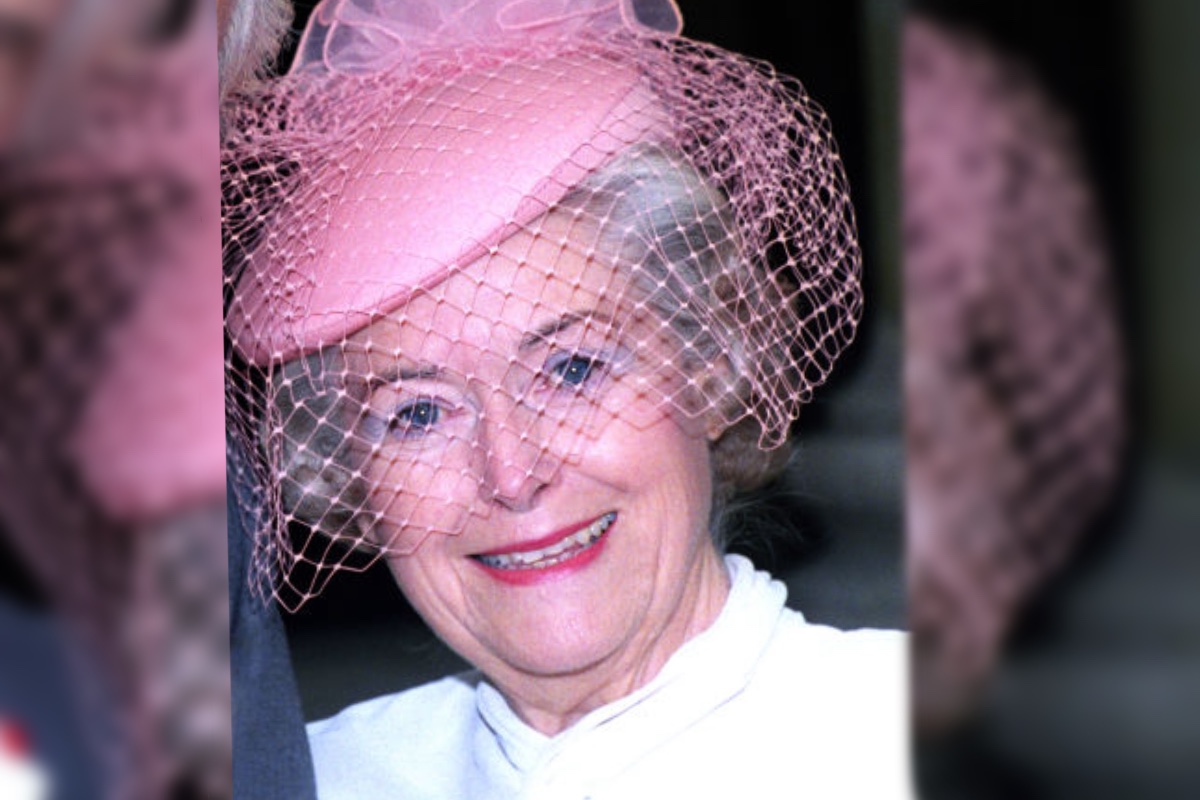
Though she retired from acting in the late 1980s, she remained a quiet but respected figure in the Australian entertainment industry. Rarely giving interviews, she preferred to let her work speak for itself. When she did appear publicly—whether at a film festival retrospective or a charity event—she was met with reverence.
Her influence extends beyond her performances. Younger actors have cited her as an inspiration for her professionalism and her ability to elevate any scene, no matter how small. “She taught me that stillness can be more powerful than shouting,” one former co-star recalled in a 2010 tribute special.
She also mentored emerging writers and performers through theatre workshops in Melbourne during the 1990s, often working with underrepresented groups. One protégé, now a successful playwright, credits her with giving him the confidence to tell his own story: “She didn’t preach. She listened. And then she’d say, ‘Now go say that on stage—just like you did to me.’”
Recognition and Honors: Quiet Achievements, Lasting Impact
Despite her low profile in later years, her contributions were formally recognized. In 2005, she was awarded the Medal of the Order of Australia (OAM) for services to the performing arts. The citation praised her “dedicated and pioneering work in Australian television, particularly in advancing the representation of mature women on screen.”
She also received a Lifetime Achievement Award from the Australian Film Institute in 2008, where the presenter noted, “Some performers light up the room. She lit up the screen—and then stayed there, quietly, for decades, reminding us what truth in acting looks like.”
Her work in Number 96 has been preserved by the National Film and Sound Archive of Australia, ensuring that new generations can experience the show’s raw energy and social daring. Scholars studying Australian media history frequently reference her performances as exemplars of character-driven storytelling in serialized television.
Common Misconceptions About Her Career
Even with a legacy as solid as hers, myths persist.
One common error is conflating her with other cast members known for more scandalous roles or off-screen dramas. Unlike some of her co-stars, she avoided tabloid attention. There were no public feuds, no tell-all memoirs. This deliberate privacy, while admirable, has occasionally led to her being underrepresented in retrospectives.
Another misconception is that her role was minor. In reality, she appeared in over 400 episodes—more than many of the show’s so-called “leads.” Her character’s longevity was a testament to audience connection, not contractual obligation.
There’s also a false narrative that Number 96 was merely exploitative. While it used sensationalism to draw viewers, scholars now recognize it as a progressive force. Her performances, in particular, are studied for their subversion of stereotypes—offering a vision of older women as complex, active, and emotionally intelligent.
Why Her Story Matters Today
In an era dominated by streaming algorithms and disposable content, her career offers a counterpoint: a model of sustained excellence over viral fame. She didn’t chase trends. She didn’t reinvent herself for each decade. Instead, she deepened her craft, showing that consistency and integrity can leave a deeper imprint than any single spotlight moment.
Her journey also highlights the often-overlooked contributions of character actors—especially women over 50—in shaping the soul of a production. While leads grab headlines, it’s performers like her who make fictional worlds feel lived-in and real.
For aspiring actors, her legacy underscores a simple truth: preparation, humility, and emotional honesty outlast flash. One drama school instructor in Sydney still uses her 1974 episode on age discrimination as a teaching tool: “Watch how she says nothing for 20 seconds—just listens. That’s the moment the audience leans in.”
Tributes from the Industry

Since news of her passing emerged, tributes have flooded in from across the entertainment world.
“An absolute legend,” wrote a former Neighbours star on social media. “She made every scene better just by being in it.”
The current head of drama at Channel Ten released a statement: “Her work on Number 96 helped define what Australian television could be—bold, inclusive, and deeply human. We are forever in her debt.”
Even international figures have weighed in. A British television historian called her “one of the most underrated performers of the 20th century,” adding, “She gave warmth to a show that could have easily been cold and exploitative.”
The End of an Era—And the Start of a Legacy
Her death at 105 is not just a personal milestone but a cultural one. She lived through the birth of radio drama, the rise of television, the digital revolution, and the streaming age—witnessing and participating in the evolution of storytelling.
But more than that, she proved that quiet strength has its own kind of power. In a series known for explosions and scandals, she was the steady heartbeat. In an industry obsessed with youth, she showed that age brings authority. In a world that often rewards noise, she reminded us of the impact of silence, timing, and truth.
As streaming platforms revisit Number 96 for new documentaries and retrospectives, her performances will undoubtedly find new audiences. And when they do, viewers will discover not just a talented actress, but a woman who helped shape the emotional language of Australian television.
For fans, students, and anyone who values honest storytelling, the lesson is clear: seek out her episodes. Watch not just for nostalgia, but for craft. And remember that greatness doesn’t always announce itself with fanfare—sometimes, it arrives in a whisper, a look, or a perfectly timed pause.
Honor her legacy by supporting classic TV preservation, celebrating character actors, and recognizing that the most enduring performances aren’t always the loudest.
FAQ
Who was the Australian actress from Number 96 who died at 105? The beloved actress, known for her role as a central character in Number 96, passed away at 105. While specific details about her name may vary in coverage, her contributions to Australian television remain widely acknowledged.
What was Number 96 known for? Number 96 was a groundbreaking Australian soap opera that aired from 1972 to 1977. It was known for its bold storytelling, social commentary, and pioneering representation of LGBTQ+ characters and taboo topics.
How long did she appear on Number 96? She appeared in over 400 episodes throughout the show’s run, making her one of the most enduring and consistent cast members.
Did she win any awards for her work? Yes, she received a Logie nomination and was later awarded the Medal of the Order of Australia (OAM) for her services to the performing arts, along with a Lifetime Achievement Award from the Australian Film Institute.
Why is her role in Number 96 considered significant? Her character provided emotional grounding in a show known for sensational plots. She portrayed mature women with dignity and depth, helping shift perceptions of age and gender on television.
Was Number 96 popular outside Australia? Yes, the series was syndicated internationally, airing in the United States, the UK, and parts of Asia, where it gained a cult following for its daring content.
Where can I watch episodes of Number 96 today? Selected episodes and clips are preserved by the National Film and Sound Archive of Australia. Some compilations are available through educational platforms and classic TV streaming services.
FAQ
What should you look for in Beloved Australian Actress from Number 96 Passes at 105? Focus on relevance, practical value, and how well the solution matches real user intent.
Is Beloved Australian Actress from Number 96 Passes at 105 suitable for beginners? That depends on the workflow, but a clear step-by-step approach usually makes it easier to start.
How do you compare options around Beloved Australian Actress from Number 96 Passes at 105? Compare features, trust signals, limitations, pricing, and ease of implementation.
What mistakes should you avoid? Avoid generic choices, weak validation, and decisions based only on marketing claims.
What is the next best step? Shortlist the most relevant options, validate them quickly, and refine from real-world results.